Table of Contents
Trump’s Aggressive Push for Massive Rate Cuts
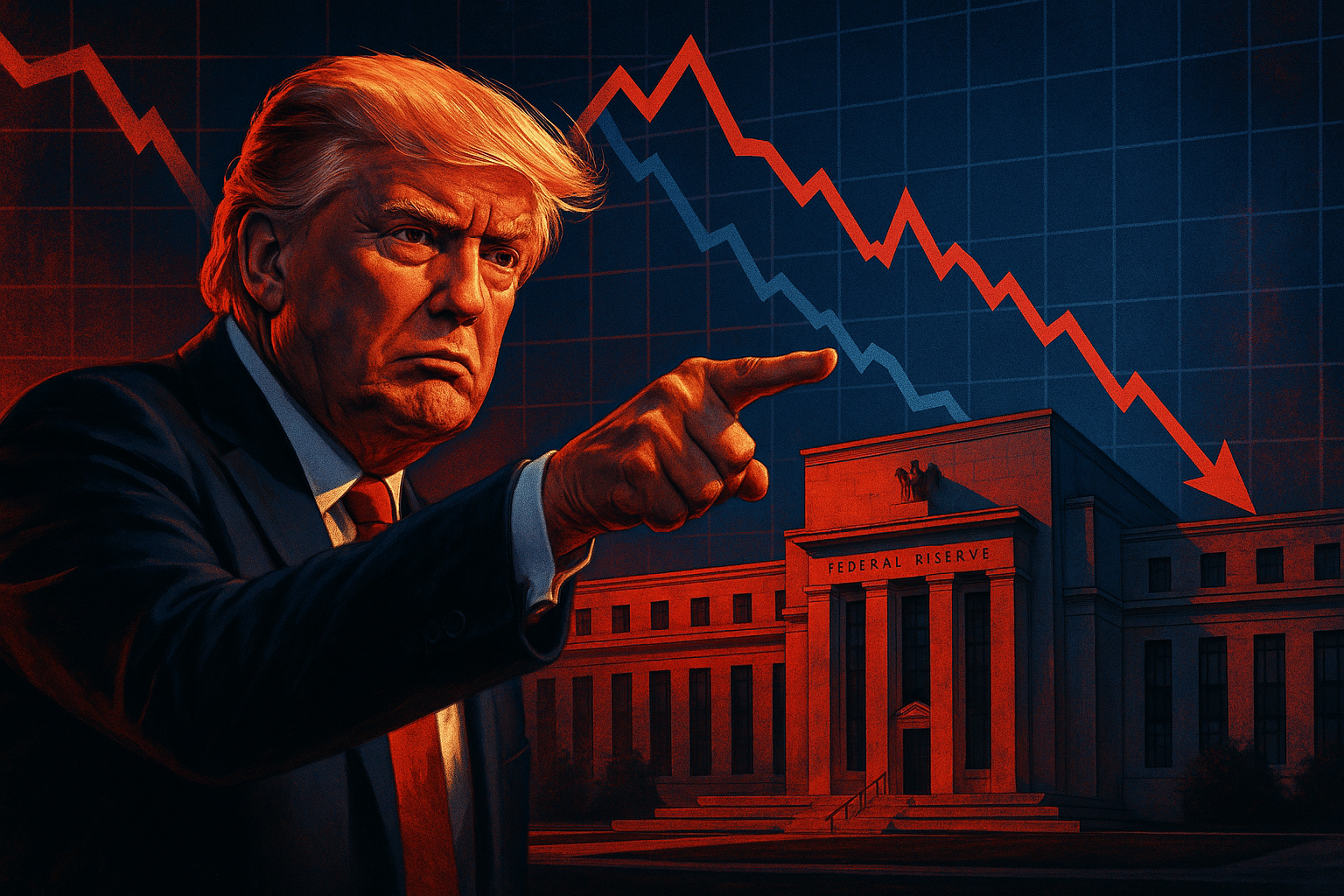
Trump rate cuts Federal Reserve inflation 2025: President Donald Trump has launched one of the most intense and controversial pressure campaigns against the Federal Reserve in modern U.S. history. Although the Fed delivered two modest quarter-point rate cuts this fall, Trump has publicly demanded far deeper cuts — up to 3%, an unprecedented intervention into monetary policy.
His argument:
- Lower rates will stimulate economic growth
- The U.S. is being “held back” by a cautious Federal Reserve
- Rate cuts are necessary to maintain America’s financial leadership
However, this request goes far beyond traditional economic strategy, especially at a time when inflation, though easing, still sits above the Fed’s 2% target.
Outbound link suggestion:
Learn more about Federal Reserve interest rate policy
This escalating conflict has sparked concern among economists, former Fed officials, and global markets.
A Pressure Campaign With No Modern Precedent
Trump’s clash with the Fed is not new — he has criticized the institution since his first term — but the 2025 tension is the most intense yet.
Reports indicate that Trump even moved to remove a Federal Reserve Governor who openly resisted his push for extreme rate cuts. This move is extraordinarily rare; the Federal Reserve is designed to operate independently from the White House to prevent political manipulation of monetary policy.
Economists warn that firing or threatening Fed officials could:
- Undermine global confidence in U.S. monetary stability
- Pressure financial markets
- Trigger political interference in future Fed decisions
Outbound link suggestion:
Background on Federal Reserve independence
Trump insists that his actions are necessary to “unlock economic potential,” while critics argue that such interference could destabilize the economy.
Why Trump Wants 3% Rate Cuts — His Economic Argument
Trump’s reasoning for pushing such aggressive cuts centers around economic growth and global competition.
1. Stimulating Borrowing and Investment
Lower interest rates make mortgages, business loans, and credit cheaper. Trump argues that slashing rates would boost:
- Home buying
- Corporate investment
- Stock market momentum
- Job creation
2. Weakening the Dollar to Boost Exports
Massive rate cuts could weaken the U.S. dollar, making American goods cheaper internationally.
3. Political Strategy
Strong economic performance strengthens Trump’s position heading into future elections. Critics argue that his motives may be partly political rather than purely economic.
Why the Federal Reserve Is Pushing Back
Fed officials have made it clear:
Cutting rates too aggressively while inflation remains above target is dangerous.
Current U.S. inflation has eased significantly from post-pandemic highs, but it is still not low enough for policymakers to justify extreme monetary easing.
Fed officials’ main concerns:
1. Inflation Could Reignite
Huge rate cuts risk fueling:
- Higher consumer spending
- Stronger labor markets
- Faster price increases
This would undo years of effort to bring inflation under control.
2. Loss of Fed Credibility
If the Fed appears politically pressured, global investors may lose confidence in the U.S. economy.
3. Asset Bubbles
Artificially low rates can inflate:
- Housing markets
- Stock valuations
- Corporate debt levels
Outbound link suggestion:
Read more on inflation dynamics and price stability
The Fed prefers a cautious, data-driven approach — not abrupt shifts driven by political demands.
Economic Risks of Trump’s Proposed 3% Rate Cuts
Experts warn that slashing rates this dramatically could create major risks.
1. A Sudden Drop in the Dollar
A sharp rate cut would weaken the dollar rapidly, raising concerns about currency volatility.
2. Rising Commodity Prices
A weaker dollar typically causes gold, oil, and commodities to spike — potentially worsening inflation.
3. Housing Market Frenzy
Lower mortgage rates could overheat real estate markets again, similar to pre-2008 patterns.
4. Debt-Fueled Expansion
Cheap loans encourage excessive borrowing, creating long-term financial vulnerabilities.
Why This Conflict Matters for Global Markets
The U.S. Federal Reserve is the most influential central bank in the world.
When the Fed shifts policy, global markets react immediately:
- Emerging markets may face capital flight
- International currencies fluctuate
- Commodity markets reprice
- Bond yields adjust sharply
If Trump successfully forces huge cuts, the global impact could be profound.
Outbound link:
Understanding global impact of U.S. interest rates
What Happens Next? Key Scenarios
Economists currently see three possible outcomes:
Scenario 1: The Fed Maintains Its Independence
The Fed continues with small, gradual cuts, ignoring political pressure.
Scenario 2: Trump Successfully Forces Larger Cuts
Unlikely, but possible if internal Fed leadership changes.
Scenario 3: A Compromise
The Fed cuts more than originally planned, but not anywhere near 3%.
Each scenario has significant consequences for inflation, the dollar, global markets, and political trust.
What Investors Should Watch Closely
This policy war creates both risk and opportunity in 2025.
1. Bond Markets
Rapid rate cuts would send Treasury yields plunging.
2. Stock Markets
Equities may rally sharply — but could form unsustainable bubbles.
3. Precious Metals
Gold and silver typically surge when monetary policy becomes unpredictable.
4. The Dollar Index (DXY)
A sharp decline could reshape global trade dynamics.
Final Verdict — A Historic Clash With Uncertain Outcomes
Trump’s push for deep, historic rate cuts has created one of the most dramatic confrontations with the Federal Reserve in U.S. history. While Trump argues the cuts will unlock growth, the Fed warns they could reignite inflation and destabilize markets.
This standoff will continue shaping:
- Interest rate policy
- The 2025–2026 economic outlook
- Global financial markets
- Political trust in the Federal Reserve
Investors, analysts, and policymakers are watching every move — because the outcome could reshape the future of the U.S. economy.
FAQs
1. Why is Trump pushing so hard for rate cuts?
He believes aggressive cuts will boost growth and strengthen the U.S. economy.
2. Why is the Fed resisting?
Because inflation is still above target, and extreme cuts could cause financial instability.
3. Is it legal for a president to pressure the Fed?
Presidential criticism is allowed, but firing Fed officials is highly controversial and rare.
4. What would happen if rates were cut by 3%?
The dollar may weaken sharply, inflation could rise again, and markets could become more volatile.
5. Should investors be worried?
Not necessarily — but they should follow bond yields, inflation data, and Fed statements very closely.
Check out more here.